Orchards, Trees & Orchard Produce
Some Gloucestershire Fruit
Orchards, Trees & Orchard Produce
Some Gloucestershire Fruit
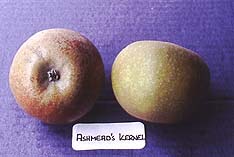 Ashmead's Kernel
Dessert Apples
Ashmead’s Kernel, a long-standing favourite in the gardens of west Gloucestershire. Raised by Dr Ashmead in the early 1700s. Christine Leighton of Cheltenham (NFG newsletter April 05) suggests Mr William Ashmead, attorney at law, who lived in or near Clarence Street, Gloucester, though the house, garden and tree are gone, at one time being the site of the Gas Office. One of the finest aromatic flavoured apples with a sweet-sharp taste, reminiscent of fruit drops. Yellowish-russetted flesh, firm, crisp, juicy, sugary. Eden from EJ Ingleby, Forest and Orchard Nurseries, Falfield in 1948. Elmore Pippin. Gilliflower of Gloucester from Saul. Gloucester Royal raised by JW Thornhill of Dursley in about 1930. Hunt’s Duke of Gloucester raised by Dr Fry of Gloucester in the early 19th century. Lake’s Kernel brought by Mr Lake to Ashleworth, exhibited 1905. Lodgemore Nonpareil / Clissold Seedling raised in early 19th century by Mr Cook in Lodgemore near Stroud, and renamed by Clissold Nursery as Cissold Seedling. Longney Russet. Martins Kernel raised by M Martin of Arlingham near Gloucester around 1953. Northland Seedling raised by AP Kitcat, Northland Cottage, Tetbury around 1930. Puckrup Pippin thought to be from Puckrup near Tewkesbury, recorded in 1872. Tewkesbury Baron thought to be from Tewkesbury, exhibited in 1883 by nurseryman Wheeler of Gloucester.
Cooking Apples
Severn Bank / Lassington, Croome Kernel was grown widely in the Severn Valley in the late 19th century/early 20th.
Dual Purpose Apples
Chaxhill Red may be same as Duni Red, raised by Mr Bennett of Chaxhill near Westbury on Severn in 1873, cider, dessert and culinary apple. Siddington Russet.
Cider Apples
Breakwell’s Seedling from Monmouth but once grown in Gloucestershire and Herefordshire. Old Foxwhelp, an old cider apple, old trees can still be found in parts of Herefordshire and Gloucestershire.
Other Apples
Ansell / Ancell, Arlingham School Boys, Ballast Apple, Barnett’s Beauty, Ben Lans, Berkeley Pippin / Dafferton, Blood Royal / Winter Quarrenden, Bromsbury Crab, Bushy French, Cambridge Quinning / Cambridge Queening, Captain Kernel / Captain Nurse / Nurses Kernel. Chaceley Kernel / Chexley Kernel / Chatley’s Kernel, may be the latter which is a Worcestershire variety, continuing research by Gloucestershire Orchards Group in 2005. Corse Hill / Corset Hill / Cosset Hills (cider) from Corse near the border with Worcestershire. Dent’s Favourite, Dymock Red / Peggy’s Apple, Flower of the West, Foxwhelp, Forest Styre, Harvey, Leathercoat / Leatherjacket, Lemon Roy, Maiden Blush, Morning Pippin, Must, Newpools, Nine of Diamonds, Nine Squares, Northland Pippin, Old Tankard, Over Apple, Overleaf, Overton Red, Phelp’s Favourite, Port Wine Pippin / Port Wine Kernel, Prince’s Pippin, Pull Court Red, Red Two Year Old, Reynold’s Kernel / Reynold’s Crab, Rhead’s Reinette, Rock Kernel, Shepperdine Silt / Black Tanker, Shilling, Shopground Kernel, Spout Apple, Stantway Kernel, Sugar Pippin, Taynton Codlin/Cow Apple, Tippetts, Tom Matthews / Golden Spire, Transparent Codlin, Upright French, Weaver's Piece from May Hill (see 'May Hill: a Short History of this Ancient Beauty Spot to Mark the Millennium' by Russ Green), White Flanders, White Styre, Yellow Styre.
Perry Pears
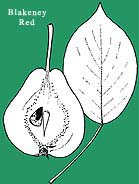 Arlingham Squash, Blakeney Red, since 1600s, Brandy, Brown Bess, Butt, Chaceley Green, Claret, Clusters, Gin. Hartpury Green, recorded in 1691, reduced to specimens in the National Collection it has now been planted around Hartpury parish, whose name is derived from the Saxon ‘Hardepirige’ meaning hard pear tree. Knapper, Late Treacle, Lumber, Merrylegs, Oldfield – recorded in John Evelyn’s 1664 Pomona, Staunton Squash, mentioned since 1691, AKA White Squash of Corse. May be same as Taynton Squash. Teddington Green, Thorn, Thurston’s Red.
Plums
Blaisdon Red, Damson Plum identified as Gloucestershire variety by Gloucestershire Orchards Group at their Plum Day in 2004. Diamond. Dimmock Red. Frampton Magnum / Winterbourne Magnum from Frampton Cotterell in South Gloucestershire, the two identified as being the same variety by Gloucestershire Orchards Group at their Plum Day in 2004. Johnnie Moor.
This list was compiled using many sources including work by the Gloucestershire Orchards Group, a gazetteer by Gloucetserhsire County Council, and The New Book of Apples by Joan Morgan and Alison Richards (Ebury Press 2002).
For a list of ‘lost’ varieties of Gloucestershire contact Gloucestershire Orchard Group on +44(0)1452 855677 or see their web-site.
Please get in touch with any additions or corrections